County mayor candidates address key issues ahead of election
-
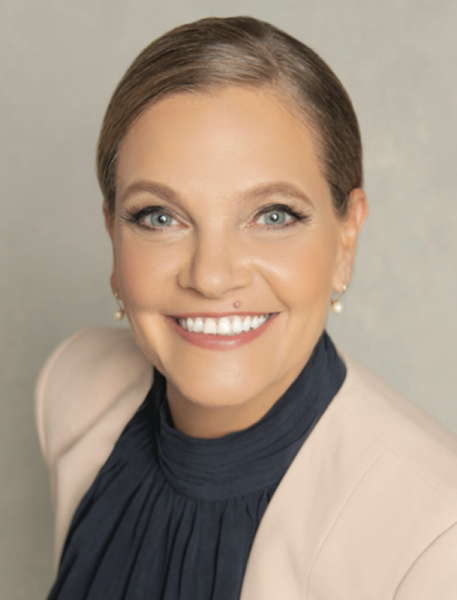
Mayor Terry Frank
-
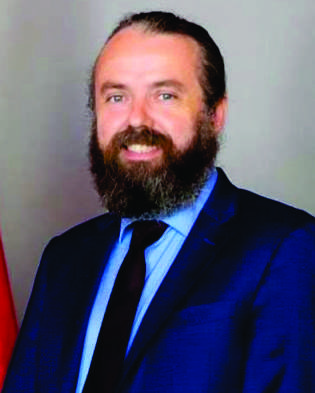
Josh Anderson
As Anderson County prepares to elect its next mayor, The Courier News invited the candidates to respond to questions on leadership, priorities and long-term planning.The questions posed were:
1. Leadership and vision: Based on your political philosophy and your approach to solving problems, why should voters elect or re-elect you as Anderson County mayor?
2. Top challenge: What do you believe will be the most-serious challenge facing the next Anderson County mayor term, and what specific policy or initiative would you pursue to address it?
3. Education: What role does education play in Anderson County’s long-term success, and how would you support the county’s schools and workforce development efforts as mayor?
4. Infrastructure: As mayor, what would be your plan to improve and maintain infrastructure, including road repairs, traffic management and future development?
5. Growth and planning: What specific policies or planning strategies would you support to ensure growth occurs in appropriate areas while reflecting the priorities and quality-of- life concerns of current residents?
The responses are unedited.
Terry Frank
Leadership: Front of mind is always my belief that I should not look to tax the people more in order to solve a problem. We need to find partners, innovate, find efficiencies, get to the root cause of a problem, or modify how we operate. More funds may be needed, but that may be reallocating or prioritizing new funds. Our governmental system is based on checks and balances and separation of powers. Most problems cannot be addressed by one individual, but solutions take partners in and/or outside of government. I work very hard to build relationships that solve problems for our taxpayers and will continue to do so if re-elected.
Top Challenge: The top challenge is tough as I believe there are really several — mental health and addiction issues, and growth just to name a couple.
However, I believe affordability is and will continue to be one of the biggest areas of concern in the county.
While Tennessee consistently ranks in the Top 10-15 of affordable states, many citizens and our employees see the impacts of affordability challenges associated with balancing normal day-to-day costs, from utility bills to medical care.
I plan to continue addressing this by:
• Working to keep taxes and fees low, especially as approximately half our county residents also live in a city where they pay a county and city tax bill.
• Continuing to work with federal, state, and other local-government partners to find cost-sharing efficiencies and grant opportunities to address escalating infrastructure costs.
• Prioritizing investments in public safety.
Crime has a negative financial impact on victims, government, and the larger community.
• Continuing to work on energy development and policies for abundant, low cost energy.
• Continued focus on job training along with traditional and trades education to ensure economic opportunity.
• Continued focus on job creation to increase wages and standard of living.
• Increase focus on housing needs and the impact of zoning and regulations on costs.
• Further enhance networking of agencies to connect citizens with resources.
Education: Education is crucial to Anderson County’s long-term success.
As mayor, my priorities are staying attuned to the needs of our schools, working to ensure a strong, fiscal environment that can financially support their needs, developing partnerships with industry and businesses that support the workforce of tomorrow.
• Supporting workforce development, maintaining awareness of grant opportunities and partnering with the schools on the grants, having conversations with federal and state agencies to foster and capitalize on opportunities for funding to support educational goals.
I was an active partner with TCAT and Roane State as we looked to locate a facility here. I have a record of involvement and leadership with workforce development, and Oak Ridge’s new energy locations are opening up additional opportunities that can help provide funding for our educational needs.
In addition, I think it is important for the mayor to socially lean into our children—such as giving speeches to recognize them and their accomplishments, and being present for their special events. It is important our young people know they are loved.
Infrastructure:
We have made quite a bit of progress in improving infrastructure.
While not required to do so, the county allocates both property tax and sales tax to help the Highway Department pave more roads. Paving is expensive, and these allocations help pave more in the county.
The state has been an excellent partner as well with funds in the form of “state aid.”
The county has a strong record of helping our utilities apply for and often match grants in order to add or replace infrastructure—whether that is water and sewer, or broadband.
Like roads, utility matches are not a requirement from the county, but it helps further projects.
Many times matching funds can help make a project feasible.
As mayor, I have made sure to be at the table where transportation, utility, or broadband plans are discussed, and where opportunities exist for possible partnerships.
The county has accomplished an asset inventory of our water/sewer resources, and the next phase will be to incorporate that inventory into planning for our county.
Anderson County has many vital industries, and looking for ways to collaborate with state and federal partners to help share costs is constantly on my radar, and has been successful during my time in my office.
Growth and Planning:
I have discussed at Budget Committee the need to enhance our current planning contract by supplementing with either an employee, an employee shared with another county, or more hours for a contract or consultant.
Anderson County is seeing growth in the unincorporated areas, and more significant growth in Oak Ridge.
This means we need to step up our game so to speak, in terms of planning for needs.
The Planning Commission is currently working through a more-robust look at planning for the county, and that work needs to continue.
The state of Tennessee, as well as federal transportation organizations, also have grants to assist in the planning area. As an example, we were able to capture is the FLAP grant through the Federal Highway Administration.
To make access safer for Gibbs Ferry Park, we received a large grant that will help with onsite traffic, but will also allow us to improve the infrastructure there, as well as adding amenities for our residents.
Josh Anderson
Leadership: I’ve served two terms as a county commissioner representing Norris, Andersonville, Glen Alpine, and Fairview.
District 3 is one of the most-diverse parts of our county, and that’s really shaped how I approach leadership.
I’ve learned that people don’t expect you to agree with them on everything, but they do appreciate it when you listen and take them seriously.
That’s something I’ve always tried to do. I make it a point to be accessible, return calls, and have real conversations with people, even when we don’t see things the same way.
I try to understand the issue, hear from the people affected, and think about what makes the most sense not just today, but five or 10 years down the road — the 30,000-foot view. Oftentimes that means finding common ground and working toward a compromise most people can live with.
As mayor, that’s how I would lead, by doing more listening than talking, by being accessible, being transparent, and making thoughtful decisions that reflect the needs of the entire county.
Top Challenge: The biggest challenge we’re facing is growth. We can’t stop it, but we can work to adequately plan for growth and the impact on roads, schools, emergency services, and infrastructure.
If we don’t plan ahead, we end up reacting instead of preparing, and that’s when we slide into a cycle of always playing catch up on paying for services and managing budgets.
What concerns me most is when growth isn’t managed well and the cost ends up falling on the people who already live here. I don’t think it’s fair for existing taxpayers to subsidize new development because we didn’t require the right infrastructure upfront.
That means asking the right questions before projects are approved:
• Do we have the roads to support it?
• Can our schools handle the additional students?
• Are emergency services prepared?
• Are we requiring sufficient bonds from developers?
If we stay disciplined and think long-term, growth can be absorbed and retain the character of our community. If we don’t, it can quickly become a burden.
I support property rights, but I also believe we have a responsibility to protect existing communities. Those two things have to be balanced.
Education: Supporting public education is a priority for me. I have two kids in public schools in Anderson County. I hear people say they don’t have kids in public schools, and don’t see much value in their tax dollars supporting schools. But these are the kids that grow up to be our first-responders, health-care workers, home builders, technicians, all the people who make a community thrive and function whether we have school-age children or not. We ALL benefit from a strong public school system.
As a commissioner, I’ve always voted to support public schools, and because it is the majority of our county’s budget, it’s the clear priority for us as a community.
One thing I’ve heard from leaders in the nuclear industry during the recent “nuclear renaissance” we are experiencing is that while a handful of nuclear physicists are needed, thousands of excavators, carpenters, welders, machinists, electricians, pipefitters, etc. will be needed to build and maintain the facilities for the fusion reactors and related businesses that will be investing in the area.
The available jobs will exceed the population of graduates Anderson County schools will be able to provide. However, it’s a unique opportunity for us to collaborate with industry partners, and invest more in career and technical education as a county so we establish AC Schools as the regional leader for career and technical education.
Since we now have vouchers in Tennessee, and the voucher program is expanding, we also need to establish ourselves as a school system that students from surrounding counties might want to attend.
State funds “follow the student” now, so if we focus on being a regional leader among public schools, we could not only receive those funds from out of county students, but we could explore charging out-of-county tuition as an additional source of funding for the school system.
We also need to balance this with investments and partnerships related to STEAM programs for our college-bound students.
Infrastructure: Over the past few years, commission has voted to support our highway department and county utilities with some of our American Rescue Plan Act funding.
As mayor, I would be committed to finding ways to collaborate with our municipalities, and also look for grants and funding from other areas. Before the COVID pandemic, it cost the county about $75,000 per mile to pave a road, and now it costs about $125,000 for the same mile. Increasing road bonds for development projects is a potential source I would like to look at.
The roads are one of the things taxpayers are able to see their tax dollars in action, so I think it’s important for a mayor to support the highway department and have a good working relationship with the road superintendent.
Growth and Planning: We need to make sure we enforce zoning laws consistently, and we need our planning commission to be more receptive to the concerns brought forth by communities and neighborhoods when zoning changes and planned developments are being brought up.
I certainly support the rights of property owners, but in rural communities zoned for agriculture, it’s not always practical to approve a development for homes on 7,500-square-foot lots (six houses per acre) because it checks certain boxes on paper.
When a community can pack the boardroom and express concerns about existing road conditions, stormwater runoff, fire protection, traffic, lack of adequate infrastructure, and lack of space in the local schools, those concerns need to be addressed and at least mitigated before planning commission signs off on a project.
People move to East Tennessee and Anderson County for a reason, and people who have been here for generations stay for a reason, and we need to plan and develop carefully so we don’t lose the character of the place we call home.